Customer story
BloomFrameAI
Built by hedwigAI, the technology behind Petal+Eon’s creative floral experience.
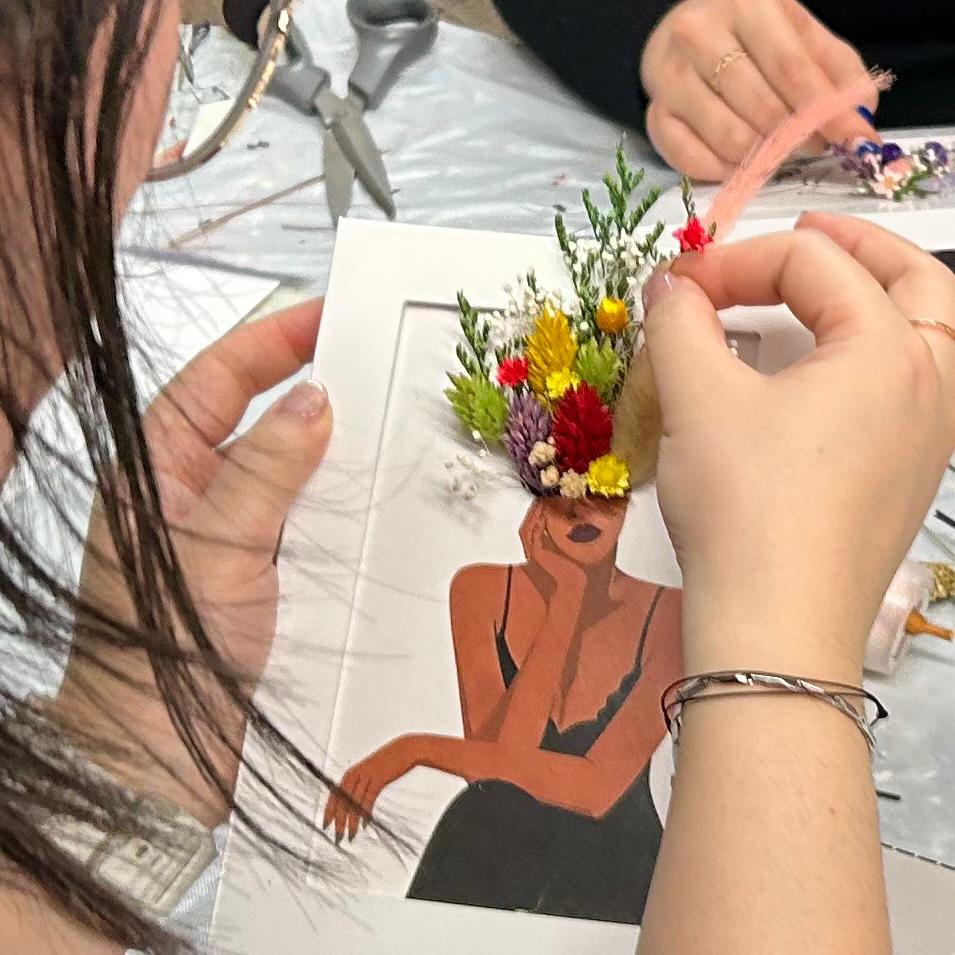
You’ve probably heard this version of the AI conversation before: it’s fast, sure, but it’s also making us a little more comfortable talking to a screen than to the person next to us.
That’s one read, but here’s another.
A shared activity and the right kind of technology can be the reason people end up bonding more. Petal+Eon is proof of that.
The New York–based company creates and hosts creative floral experiences where people use preserved flowers to make lasting arrangements. It has hosted over 1,000 workshops around the world, for clients ranging from Fortune 500 offices to churches to charity events for cancer patients.
Behind its flagship product, BloomFrame, sits BloomFrameAI, built by hedwigAI, which turns a simple text prompt or an uploaded photo into custom artwork that makes every frame feel deeply personal.
The product: BloomFrame
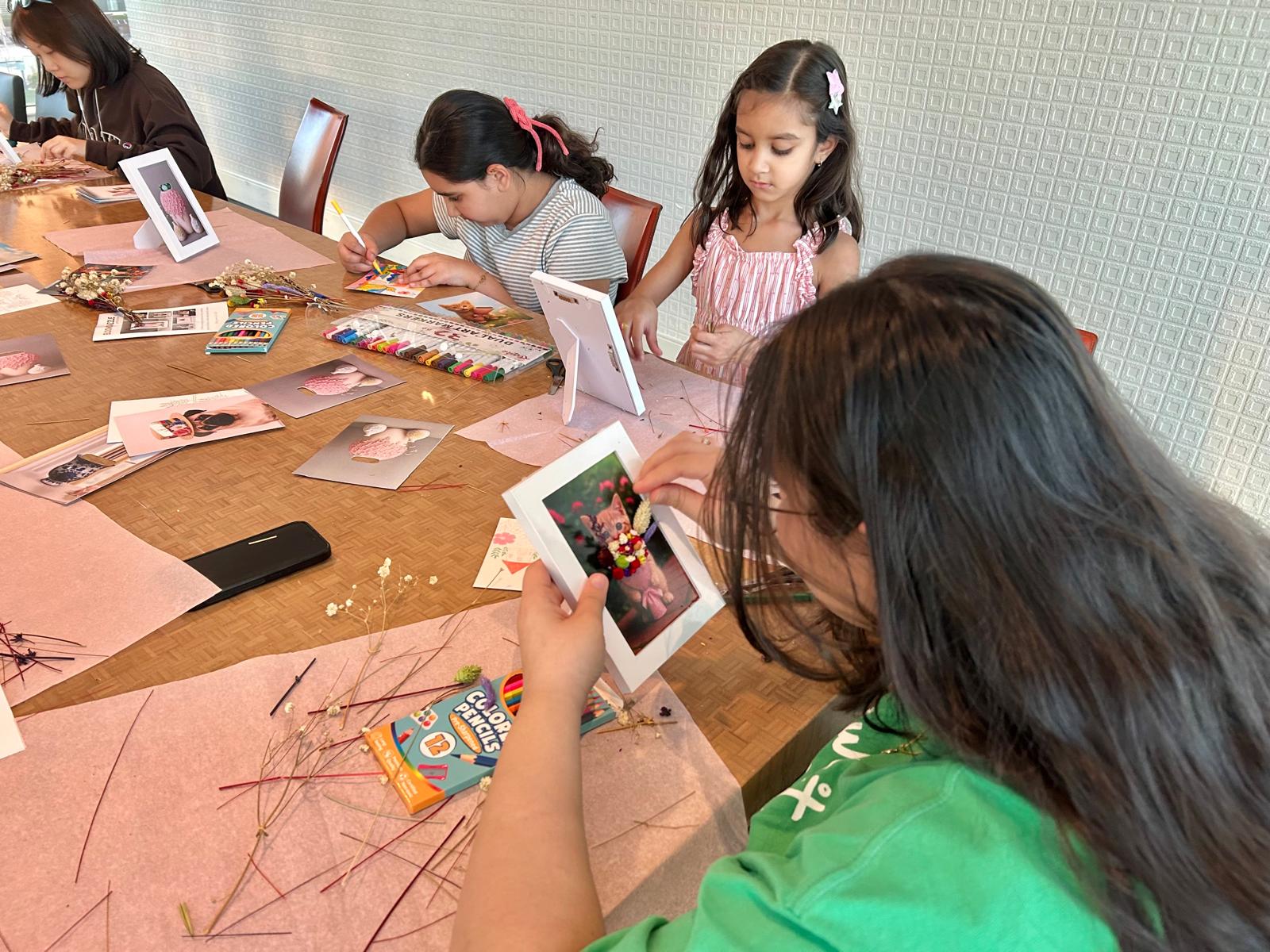
Jim and Emma, the couple who co-founded the company, first came across preserved flower arranging through Ikebana schools in Japan, which inspired them to host floral workshops around bonding and artistic expression. They wanted the workshops to be low-pressure enough for people to unwind, talk, and enjoy each other’s company while creating.
That philosophy led to BloomFrame, a patented DIY kit with a frame, real preserved flowers, and printed artwork, simple enough for anyone five and up. Participants can press the flowers into place and assemble it in minutes without needing an instructor to guide them.
Before BloomFrameAI, each frame’s artwork was created in Canva. That meant a limited set of designs and difficulty meeting customization requests at scale or on demand.
What they wanted instead was for customers to build their own version, around a specific person or memory, without hand-making every single one.
The challenge: a problem that only looks simple
On the surface, generating artwork looks like a task any image tool should handle. Ask for a dog holding a vase of flowers, and an AI will generate the image in seconds.
“It’s actually a very challenging problem, because it’s deceptively complex.”
But a BloomFrame isn’t just a picture, it’s a physical object. Every piece of artwork has to meet a set of spatial constraints that have nothing to do with how good it looks.
- The flower area has to line up exactly with the frame’s internal mesh.
- A consistent margin has to run around the full edge, since the physical frame covers it. Any part of the design cut off at the border compromises the whole piece.
- The artwork has to work across different frame sizes, each with its own dimensions.
- The digital preview shows flowers in the design, but the company prints a version without them. The system has to generate what the artwork looks like underneath the flowers.
- The output PDF must include an oval where the flowers will be placed, sized to exactly meet the die cutters’ requirements.
Solving one of these by hand was manageable, but doing it for every customer on demand presented a real challenge.
The solution: BloomFrameAI
hedwigAI approached this less as a standard generative art task, and more as a spatial manufacturing problem solved with AI.
On bloomframe.ai, users start from templates that are already sized and positioned to fit the frame, or upload a personal photo instead. A simple text prompt can reimagine the scene from there, placing people from a photo into a new setting, or adding custom text. Once finalized, the frame ships with that exact artwork printed and installed.
To keep each generated image within the frame’s physical limits, the solution follows a three-stage process:
- A language model reads the prompt first, translating it into BloomFrame’s specific requirements before any image is generated.
- An image model builds the design itself, kept inside the frame’s dimensions and clear of the area where real flowers will sit.
- A final pass removes the preview flowers, leaving a clean layer ready to print, since the physical flowers go in by hand afterward.
Whenever hedwigAI improves its backend tools, those upgrades automatically reach Petal+Eon.
The partnership
“They asked really thoughtful questions, and it felt like they could execute, fast and affordably.”
What stood out to Jim was how quickly hedwigAI understood what the company was trying to solve, and the diverse approaches it brought that he hadn’t considered himself. Jim also calls it an educational experience in its own right. Along the way he picked up basic Markdown, enough to update the events calendar and blog on his own.
The impact
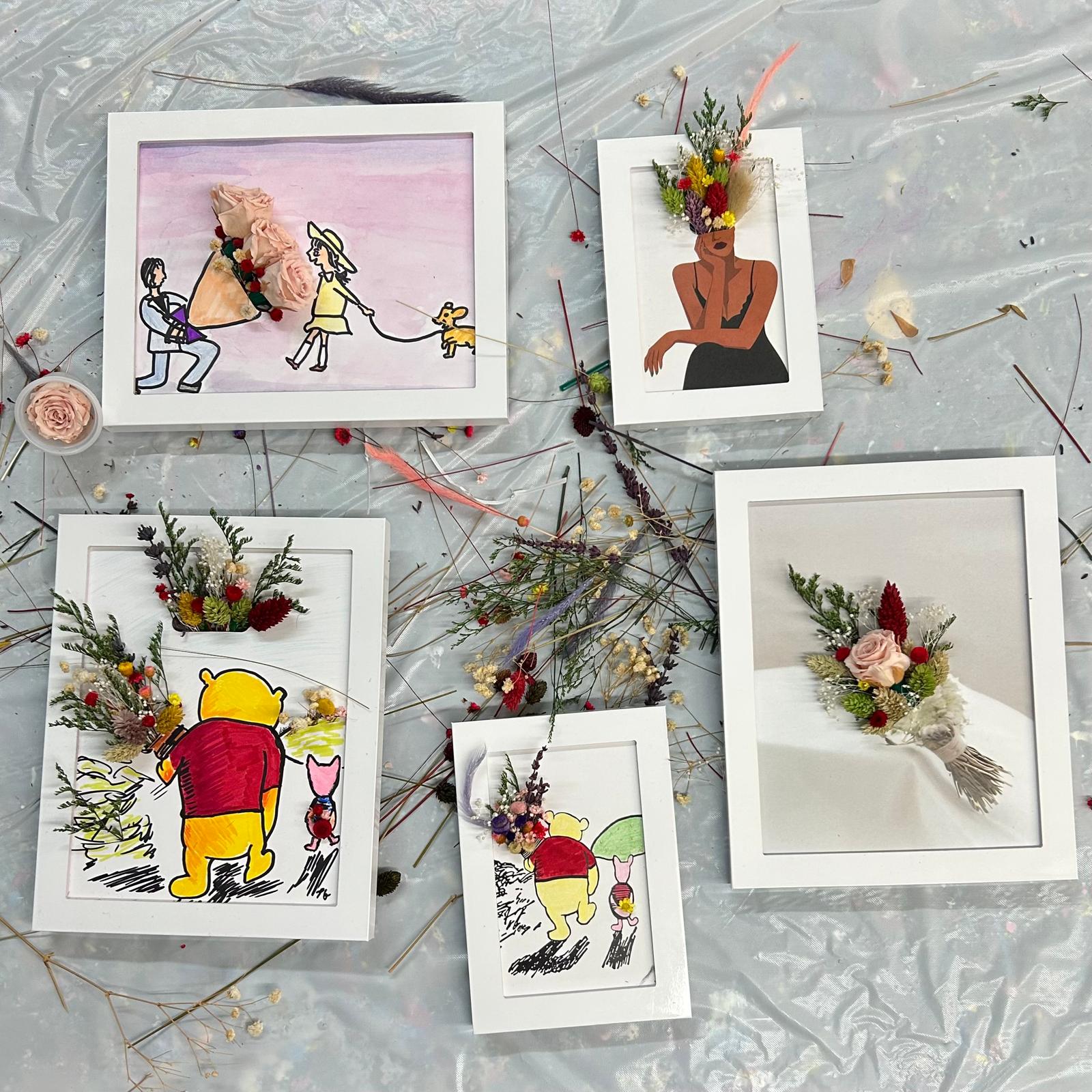
Personalization is where the most meaningful change happened. The company has always been about human connection, and BloomFrameAI gives people a way to build that connection around family, friends, or special memories.
“People are making personalized things, pictures of themselves, artistic things, and immediately the whole group can see it and talk about it. It’s great for sharing, personal in a good way, thoughtful and memorable.”
In workshops, watching everyone’s custom designs take shape in real time gives participants a new focal point to share stories and to connect.
Beyond product customization, the tool has also given the company a second way for people to discover it. A business that originally grew almost entirely by word of mouth now has a new channel bringing in customers.
It has also enabled virtual BloomFrame Design Studios that are free for participants. Just generating and sharing new art designs creates a fun, interactive, and creative experience. Then, participants can optionally choose to buy their design and turn it into a DIY flower-arranging experience that can ship globally. These custom designs create a uniquely personal gift made of real flowers preserved to last for years.
Looking ahead
Jim sees BloomFrame, and BloomFrameAI underneath it, as the main growth engine for the company’s next chapter, alongside a growing network of floral hosts.
“This might be a way to bring back an extremely creative, artistic job, very much about being in the community, connecting people, and being social.”
The technology has made personalization possible and accessible, without trading away the human connection and shared experience at the heart of the company. If anything, it has strengthened the human side of creating and sharing with the people around us.